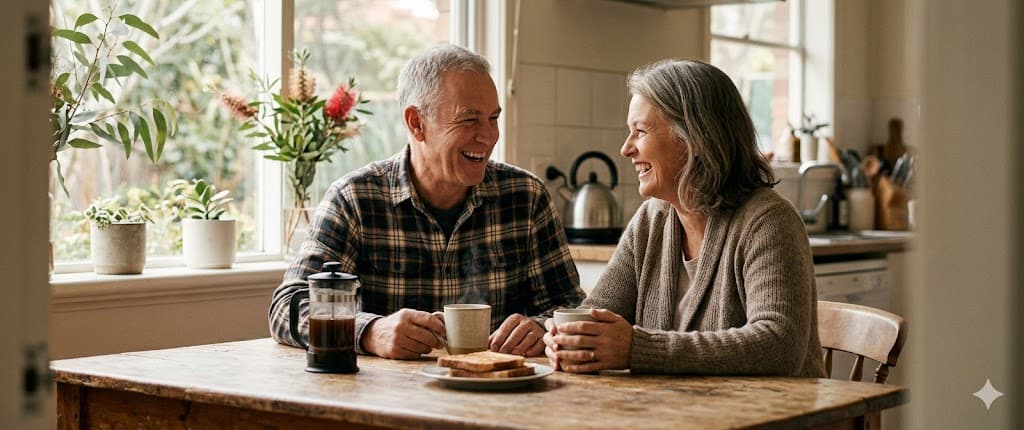
Most of your time right now is taken up by appointments, paperwork, and the weight of what you are navigating. This guide is about the other part: the part that matters most.
Take photos and videos
You will want them later, and so will the people you love. Do not wait for a special occasion. Take them at the kitchen table, in the garden, on ordinary days. The ordinary ones are often the ones you treasure most.
Consider setting up a shared photo album through your phone so family members who are not nearby can be part of the everyday moments. A few minutes of video of someone cooking, laughing, telling a story carries something that still photographs cannot.
If there is a desire to record stories, memories, or messages for people who will come later, there are services and apps specifically designed for this. A voice recording on a phone is also sufficient. The medium matters less than the doing of it.
Go on trips
Even a day trip somewhere you both love is worth planning. If energy allows, consider a weekend away. If your doctor confirms that travel is safe, think about somewhere you have always wanted to go but never did. If you are planning international travel, check whether your destination has a reciprocal healthcare agreement with Australia before you book. Some countries do; many do not. Talk to your doctor first.
Plan for how travel might affect medical routines. Bring enough medication for the trip plus a buffer. Carry a current medication list and a letter from your GP summarising the diagnosis and current medications. Know where the nearest hospital is to where you are staying.
Invite people in
Friends, family, the people who matter. You do not need a reason or a special occasion. A meal, a coffee, an afternoon watching a film together. These visits matter more than you expect, to everyone involved.
Some people will not reach out because they do not know what to say or are afraid of intruding. Reach out to them. A direct, simple invitation is often all that is needed: "We'd love to see you. Come for dinner on Saturday." Give people permission to show up.
If the person with the illness finds visits tiring, keep them short and let them choose when to end it. Fifteen minutes of meaningful connection is better than an hour that depletes.
Write letters and record messages
Letters, voice messages, or videos for the people who matter most are something many people want to create but keep putting off. The right time is now, not when things are harder.
These do not need to be formal or polished. A letter that sounds like the person is more valuable than one that sounds like a speech. Tell them what you want them to know. Tell them what you are proud of. Tell them what you hope for them.
Consider writing a letter for future milestones that you may not be present for: a graduation, a wedding, the birth of a grandchild. These become irreplaceable gifts.
Make ordinary days count
Not every moment needs to be a milestone. Sometimes the most important thing is simply being present together, without an agenda. A morning cup of tea. Reading together. Sitting in the garden. Cooking a meal.
The people who have been through this often say that what they remember most is not the big trips or the significant occasions, but the small ordinary moments of closeness. Those are available every day, and they do not require anything except choosing to be present to them.
Manage your energy
Serious illness brings fatigue that is different from ordinary tiredness. It is worth being strategic about energy, particularly for things that matter. Plan meaningful activities for the part of the day when energy is typically highest. Rest before events you are looking forward to. Say no to things that drain energy without returning it.
Carer Gateway (carergateway.gov.au) has free support and resources for carers, including help finding respite so you both have the space to rest and restore. It is also worth protecting some energy for the relationship itself: for conversations, for physical closeness, for the simple act of being together without performing for visitors or managing logistics. That private time is as important as any trip or event.
Platform tools
- Your checklistEvery task across all five stages of the journey, gathered in one place so nothing is forgotten.
- Document vaultStore the will, power of attorney, advance care directive, and other important documents securely in your account. Available to members.
Was this guide helpful?
Pierre started 18December after his partner Mark was given a terminal diagnosis, when they mapped out everything that needed to happen at the kitchen table. He reviews the guides to keep them honest, plain, and genuinely useful. About 18December
Last reviewed 10 October 2026
Read the latest version of this guide at www.18december.com.au/guides/make-memories
© 2026 18December Pty Ltd. All rights reserved. This guide is original content and may not be reproduced, distributed, or republished without written permission.
← Back to Living with terminal illness