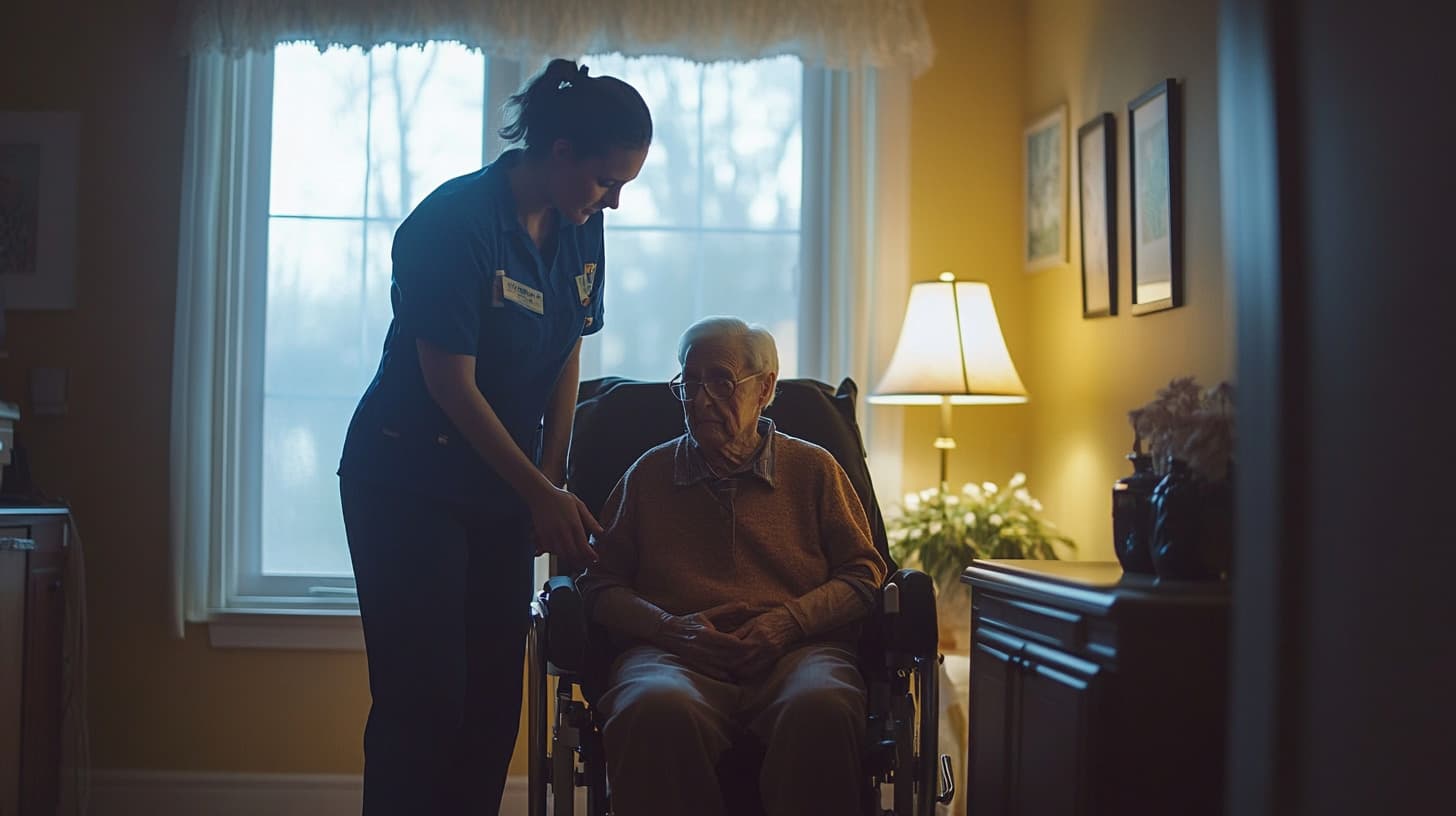
Staying at home for as long as possible is what most people want. A range of government-funded and privately provided services can make this possible for far longer than most families expect.
The home care system changed on 1 November 2025. A new program called Support at Home replaced Home Care Packages from that date. It includes a dedicated End-of-Life Pathway: short-term, higher-level funding to help people assessed as being in their final months stay at home. The Commonwealth Home Support Programme continues alongside it, and the government has said it will be funded to at least 30 June 2029. Program details and funding amounts are still settling in, so check My Aged Care on 1800 200 422 or at myagedcare.gov.au for what currently applies to you.
My Aged Care
My Aged Care is the Australian Government's gateway to home care services for people aged 65 and over (or 50 and over for Aboriginal and Torres Strait Islander peoples). If the person with the terminal illness is 65 or older, this is the primary entry point for most government-funded home support.
Call My Aged Care on 1800 200 422 or visit myagedcare.gov.au to start an assessment. The process involves a phone screening to understand the person's needs, followed by an in-person assessment by a My Aged Care assessor who visits the home. The assessment determines what services are appropriate and what funding level is available.
Once assessed, the person may be approved for Commonwealth Home Support Programme services or for Support at Home. In limited cases, someone on Support at Home can also get short-term CHSP services such as respite. The assessor will explain the options based on the assessment outcome.
Commonwealth Home Support Programme (CHSP)
The Commonwealth Home Support Programme provides entry-level support services to help older people remain living at home. Services include personal care (help with showering, dressing, and grooming), domestic assistance (cleaning, laundry, shopping), meal preparation and delivery, home maintenance, transport to appointments, and social support.
CHSP services are subsidised by the government but recipients pay a contribution based on their capacity to pay. Each provider sets its contributions under a national framework and agrees them with you before services start. If paying is hard, tell the provider.
CHSP services are usually provided by approved aged care service providers in your local area. My Aged Care maintains a provider directory at myagedcare.gov.au/find-a-provider.
Support at Home
Support at Home replaced Home Care Packages on 1 November 2025. It provides coordinated, ongoing support for people with more complex needs than the entry-level CHSP covers. After assessment, a person is approved at a funding level matched to their needs, and they choose an approved provider who coordinates their services. Services can include nursing care, personal care, allied health, equipment, and help around the home. It sits inside the aged care system, so eligibility follows the My Aged Care thresholds above. If the person you are caring for is younger than that, the NDIS section below is where to look instead.
Since 1 October 2026, personal care under Support at Home is fully funded. Help with showering, dressing and continence care moved from the independence contribution category into clinical supports, so participants no longer pay a contribution towards those services. Contributions still apply to services in the other categories. Personal care still needs to be approved in the person's support plan and still draws on their Support at Home budget, so what changes is the contribution, not the limit. Services delivered before 1 October are still charged at the old contribution, even if they are invoiced later. The Department of Health, Disability and Ageing sets out the detail on the personal care contribution change.
For someone with a terminal illness, the most relevant part is the End-of-Life Pathway. This is short-term, higher-level funding for people whose doctor or nurse practitioner estimates they have around three months or less to live, and who need a high level of help with daily life. The funding is for about 12 weeks, and anything left can be used for up to four more weeks. If support is needed after that, a support plan review can move the person onto ongoing Support at Home. Care can include nursing to manage pain and symptoms, allied health, and personal care.
If the person already has an ongoing Support at Home arrangement, they can move onto the End-of-Life Pathway through a high-priority review of their support plan. Ask My Aged Care or the provider about this specifically.
The exact funding levels, amounts, and contribution rules are set by the government and are still bedding in. Check My Aged Care for the current detail rather than relying on figures that may have changed. Apply as early as possible so support is in place when it is needed.
NDIS (National Disability Insurance Scheme)
The NDIS provides funding for support and services for people under 65 with a permanent disability. If the person with the terminal illness is under 65 and their condition has significantly affected their daily functioning, they may be eligible for NDIS support.
A terminal illness does not automatically qualify someone for the NDIS. The key criterion is whether the impairment is likely to be permanent, which the NDIS takes to mean likely to last for life once all available and appropriate treatments have been tried, and whether it substantially reduces the person's ability to manage everyday activities. For illnesses with an uncertain progression, specialist advice on NDIS eligibility is worthwhile.
Contact the NDIS at ndis.gov.au or call 1800 800 110 to enquire about eligibility. The NDIS can fund a wide range of supports including personal care, equipment, therapy, and modified vehicles.
Palliative care home support
Palliative care home support is distinct from general home care and is specifically designed for people approaching the end of life. Community palliative care teams provide nursing visits, equipment, medications management, and after-hours support. This is covered separately under your referral to a palliative care service and does not require a My Aged Care assessment.
As the illness progresses, palliative care home support will typically intensify. Visits usually become more frequent in the final weeks, though how often depends on the service and where you live. The palliative care team will manage equipment, medications, and the family's support needs through this period.
See the palliative care guide for more detail on accessing this service.
Carer Gateway
Carer Gateway provides services and support specifically for carers. This includes respite care, peer support, counselling, coaching, and practical services. It is funded by the Australian Government and is available to all carers regardless of the age or disability status of the person they are caring for.
Call Carer Gateway on 1800 422 737 or visit carergateway.gov.au. A carer adviser will discuss your situation and connect you with services in your area.
Respite care through Carer Gateway is particularly important. Carers who do not take regular respite burn out, and the consequences for both the carer and the person receiving care are significant. Carer Gateway can arrange in-home respite, community respite, and emergency respite when something unexpected happens.
Equipment and home modifications
As a person's physical needs change, the home may need to change with them. This includes equipment such as hospital beds, pressure mattresses, shower chairs, commodes, and mobility aids, as well as modifications like grab rails, ramps, or widened doorways.
Your palliative care team or occupational therapist can assess and organise necessary equipment. Much of it can be loaned rather than purchased. Commonwealth Home Support Programme and Support at Home can also fund some equipment and modifications.
An occupational therapist (OT) can assess the home and recommend what is needed. Ask your palliative care team or GP for an OT referral as soon as mobility or daily functioning becomes an issue.
Platform tools
- Your checklistEvery task across all five stages of the journey, gathered in one place so nothing is forgotten.
- Document vaultStore the will, power of attorney, advance care directive, and other important documents securely in your account. Available to members.
Was this guide helpful?
Pierre started 18December after his partner Mark was given a terminal diagnosis, when they mapped out everything that needed to happen at the kitchen table. He reviews the guides to keep them honest, plain, and genuinely useful. About 18December
Last reviewed 10 October 2026
Read the latest version of this guide at www.18december.com.au/guides/home-services
© 2026 18December Pty Ltd. All rights reserved. This guide is original content and may not be reproduced, distributed, or republished without written permission.
← Back to Living with terminal illness